The Great Optimist Walks Away
Updated: Sep 30
Editor's Note: On August 11, 2021, Masayoshi Son announced that SoftBank would suspend its investments in China. Until then he had been the acknowledged standard-bearer of the camp that was long-China. This essay sets out the logic behind his investing and argues that investors and entrepreneurs are leaving China in growing numbers because the party-state system has once again begun to show an ideological preference.
This article was originally published in the Humanistic Economics Society's "Economics Looks at the New Business" column as "The Great Optimist Goes Quiet."
1.
Some people invest with a microscope, taking pleasure in variables, models and theories, in a fog largely of their own making. Others invest with a telescope, and the world inside that lens is simple enough to be set out in three or four sentences.
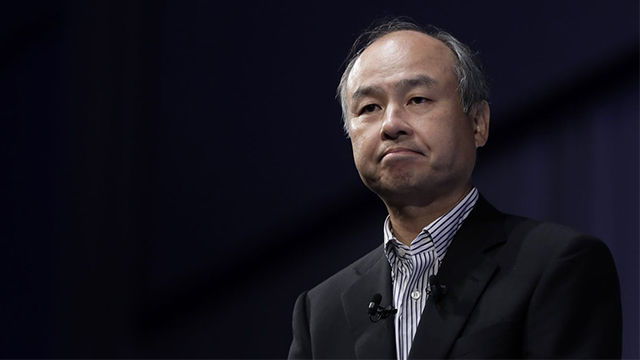
Masayoshi Son belongs to the second group. Going back over the record after the announcement that SoftBank would suspend its China investments, one finds that his three or four sentences almost speak themselves. They are his investment logic, and simultaneously frame the question a great many people are now asking: why has the most optimistic member of the long-China camp decided to leave?
2.
The first sentence: scale, scale, and scale again. Investing is like fishing, and a good fisherman goes where the fish are big. Where are the fish big? Where the water is deep. The economist Zhou Qiren once described the Chinese economy in just those terms: in big water there must be big fish. Big water means a large market.
Son's investment in Alibaba in 1999 was the first big fish he pulled from that water, and the core of the case for going long on China has always been an appreciation of market size.
The market, as the infrastructure of commerce, exhibits powerful returns to scale. A larger market permits a finer division of labor, which lowers unit costs, widens the range of products and services, and raises labor productivity, so that more value is created and growth accelerates.
Growth in turn lifts incomes, and higher incomes enlarge the market again. Commerce's basic infrastructure is therefore a positive feedback system, and scale is what governs it.
The new economy has done nothing more than speed the cycle up.
In the eyes of investors, a market of extraordinary size is the greatest stroke of national fortune there is, and the water any fisherman should be casting in. Carried further, the logic runs like this: absent artificial barriers, the largest market keeps taking in what lies around it and growing, encroaching on smaller markets as it goes. People, companies, organizations and states have little choice but to join it, since the cost of staying outside only rises. That is an iron law of investment, and it is why the fishermen believed that China and the world beyond would keep opening to one another.
The second sentence: you need more than you think. A founder says he needs a hundred dollars, and Son replies that no, he needs a thousand. You need more than you think. The scene has repeated itself many times.
Which matters more, rapid growth or efficient growth? When the two cannot be had together, Son's answer is the former. Efficient growth requires reasonable costs and profits, yet the most important source of reasonable costs and profits is in fact rapid growth, particularly in the new economy.
The plain meaning of the network effect is that your scale is not only your own accelerator but a constraint on everyone else. You need more money than you think in order to consolidate critical scale, or to reach it before your rivals do, through subsidies and similar measures, and so be first into positive feedback. At a particular stage of an internet company’s life, that is the central strategy.
The Vision Fund that Son created is the largest fund ever raised. When it was established in 2016 it had gathered $100 billion, in a year when total annual investment across global primary markets came to only about $80 billion. The Vision Fund can equally be understood as a head-start fund, one that uses deliberate over-investment to buy that head start. In little more than two years it backed over eighty unicorns worldwide, ByteDance and Didi among them, at a remarkable pace.

The third sentence: clusters, clusters, clusters. Entrepreneurial talent belongs not only to founders but to investors as well. Founders, absorbed in their own niches, often lose sight of the whole, whereas an investor can realize a macro intention through investment strategy. In periods of technological change the investor often possesses entrepreneurial talent of a higher order.
If Neil Shen of Sequoia Capital was the man who bought the entire mobile internet, Son is probably the man who hopes to buy the whole of AI.
What he wants to build is a cluster of AI products and a cluster of founders. Within it, one company starts from food delivery, another from ride-hailing, another from the office, and in the end those scenarios are linked into a digital empire driven by AI. Most people's daily lives touch that cluster to some degree, which makes all of us, to some degree, subjects of the empire.
Building that cluster is Son's most important commercial intention, and it shows the higher order of his entrepreneurial talent. Everyone invokes synergy, yet nobody knows whether one plus one can exceed two, let alone what it actually equals. Only an investor optimistic enough about the picture at that higher order can execute without hesitation, case by case below it, a strategy of deliberate over-investment aimed at getting off the line first.
The fourth sentence: give the money to people whose eyes light up. That money should go to people with entrepreneurial talent is common ground among investors. The harder question is what such a person looks like.
The dramatic version told in the trade is that SoftBank took five minutes to decide to invest in Alibaba, because Son judged Jack Ma to be a man whose eyes lit up. What makes eyes light up? Son is well placed to answer, because the person he is looking for is in fact someone like himself: a man who makes enormous boasts and then makes them good. He is looking for people who possess both the capacity to dream and the capacity to execute.
Another Vision Fund partner has said that Son's boasts, printed on A4 paper, would run to at least a hundred pages.
In 2006, when SoftBank decided to enter the Japanese telecommunications industry, Son said it would overtake NTT, then the country's largest carrier, within ten years. The claim was roughly on the order of Xiaolingtong, China’s PHS operator, announcing that it would overtake China Mobile. Awkwardly for the skeptics, it took less than ten years.
Around 2013 he said he would create the largest investment fund in the world, several times the size of the second largest, and awkwardly again, three years later he had.
In 2018, with SoftBank and the Vision Fund in financial difficulty, he boasted that his AI empire would run for three hundred years. Whether that one comes good, heaven only knows.
Anyone who has spent long enough in markets will probably agree that the essence of entrepreneurial talent may not be innovation at all, but optimism. Over a long career of boasting, what carries a person through volatility, setbacks, rumor and doubt is an optimism with no particular grounds.
3.
Now, though, the greatest optimist of them all has decided to leave.
The tightening regulatory environment is not the main reason. The AI economy and tighter regulation are nearly two sides of the same thing, and to invest in the AI economy is by definition to prepare for tighter regulation. His remarks on many occasions over the past several years show that he had long expected regulation to tighten.
What has given Son and the long-China camp pause is the reappearance of an ideological preference. They need time to confirm that the market remains the "decisive force." In the economic realm, nothing matters more than that.



Comments