The Internal and External Challenges of Restoring Private Entrepreneurs' Confidence
Updated: Sep 18
The following is an interview with Fu Xiaoyong by Liu Chang. Originally published in Chinese in Sanlian Lifeweek on August 22, 2023. It has been translated and republished here in an abridged form with editorial annotations.
Entrepreneurs are neither borrowing nor investing, a sign of how little confidence they have in the economic outlook. How will China's private entrepreneurs, long known for their toughness and agility, carry on from here? We put the question to Fu Xiaoyong, co-founder of the Humanistic Economics Society. His answer: what would restore their confidence is a market whose direction they can predict, and better access to information about it.
What Private Entrepreneurs Agree On
Sanlian Lifeweek: The very pairing of "private enterprise" against "state-owned enterprise" is distinctively Chinese. In other major economies, state ownership rarely exceeds 15 percent. Yet China's state-owned enterprises held 328.74 trillion yuan in total assets by 2022, more than 2.7 times GDP. What does a gap that wide say about China's economic structure?
(Editor's note: the gap has since widened. State-owned enterprises nationwide held more than 400 trillion yuan in assets at the end of 2025, roughly 2.85 times that year's GDP.)
Fu Xiaoyong: In most countries, especially those in the early and middle stages of industrialization, state firms sit upstream, well back from the market for final consumption, supplying public goods and infrastructure, and their share is small. Private firms sit downstream, close to that market, and their share is large. The two are often a division of labor rather than rivals. What is rare is a country where state-owned resources account for as much of GDP as they do in China.
Whether the head of a state firm counts as an "entrepreneur" is disputed. State firms mostly earn from resources or permissions, above all monopolistic and exclusive ones, while an entrepreneur earns in a competitive market. Set against the drive to make state firms "bigger and stronger," private entrepreneurs' sense of fair treatment, and with it their confidence, can hardly help but suffer.
Sanlian Lifeweek: You know China's entrepreneurs well and have some sense of their counterparts abroad. What defines Chinese entrepreneurs as a group?
Fu Xiaoyong: What strikes me most is the boundary between government and market. Entrepreneurs in many developed countries are solving an equation in one variable: market acceptance is enough. In China they are solving an equation in several, and the market's verdict is only one term. Their counterparts abroad have more room to move. Chinese entrepreneurs have the harder job.
Two of the Yabuli China Entrepreneurs Forum's surveys capture what that does to them. The first took its cue from a popular song, "Where Did the Time Go?", and asked entrepreneurs where their own time goes, on the premise that how anyone spends their hours matters. Across questionnaires from more than 1,200 firms, "social obligations" came top at over 60 percent. Asked where they would rather spend that time, 56.8 percent said with their families, the largest share. A companion survey asked what "entrepreneurial spirit with Chinese characteristics" consists of: 70.8 percent named "relationships" and 66.1 percent "the direction of policy."
None of this will surprise anyone. European and American entrepreneurs lean toward individual thinking, independence and venture capital. Chinese entrepreneurs lean toward relationships, family interest, collective thinking and teamwork.
Sanlian Lifeweek: More than forty years of Reform and Opening have produced successive cohorts of private entrepreneurs, and the differences between generations are marked. How did those differences form?
Fu Xiaoyong: The generational differences are indeed sharp. The first cohort, from the late 1970s and the 1980s, came mostly from Jiangsu, Zhejiang, Fujian and Guangdong, where Reform and Opening began. Liu Yonghao, chairman of New Hope Group, is the type. They were village talents who rose by seizing the moment. The market was a blank slate, so they hunted for gaps and filled them with whatever was within reach, animal husbandry or light manufacturing. Those four provinces still have the most private firms and the most developed private economies, spanning manufacturing, trade, technology and services. When the Forum asked which region had the most entrepreneurial spirit, more than 70 percent named Jiangsu and Zhejiang, with Fujian and Guangdong second at 33 percent. The first generation can be called opportunity seekers, because after so long closed off and so long poor, any opening was enough for them to show what they could do.
The second generation went into business after Deng Xiaoping's southern tour of 1992, the scholar-officials who "jumped into the sea of commerce." Most had held senior government posts first. They chose different ground from the first cohort, concentrating in new fields such as auctions, insurance, futures and credit ratings, each borrowed from the developed world and transplanted into Chinese society. Innovation, as the phrase went, meant being first to imitate. The second generation can also be called strategy seekers. Opportunities were everywhere around them, but they picked their direction from their own strategic reading, and they did much to root new industries in China.
The third generation returned from study abroad, Baidu's Robin Li among them, bringing the machinery of the primary venture market home with them. Early on they were more concerned to show people what new technologies and new business models would mean for ordinary life. The firms that followed, in mobile internet and later in fields such as AI, all work by the mutual search of technology and capital, and look more and more like startups in the developed world. That mutual search is one of the central events of a market economy. In that sense the third generation, and the fourth that arrived with the mobile internet, did much to bring China's market economy to maturity.
Sanlian Lifeweek: "56789" is now the usual shorthand for the private economy's role: more than 50 percent of tax revenue, 60 percent of GDP, 70 percent of technological innovation, 80 percent of urban employment and 90 percent of all enterprises. Does private entrepreneurs' confidence rest on that accumulated growth?
Fu Xiaoyong: Seen from the entrepreneur's side, confidence has four dimensions: the economic environment, the policy environment, the political and legal environment, and the social and cultural environment. On one hand, private entrepreneurs have been one of the important non-governmental forces shaping Chinese society across these forty years. The laws and regulations of many industries were refined in step with the startups in them. And the Chinese public holds entrepreneurs in high regard, higher than the public abroad does. Students have been known to mob a famous entrepreneur the way they would a film star.
But that confidence has not climbed steadily. It swings. Entrepreneurs tend to be listened to more when the economy is weak and less when it is strong. The Forum has published its Chinese Entrepreneur Development Confidence Index since 2010, and the readings through 2020 show three things. The index never fell below the 50-point line between expansion and contraction, and trended slightly upward. It moved in rough three-year cycles, troughing in 2012, 2015 and 2018, closely tracking the economic cycle. And it was highly sensitive to international politics and economics: confidence visibly buckled in 2017 and 2018, just as US-China trade frictions began.
Even so, Feng Lun, founder of Vantone Real Estate, once set out a consensus that China's private entrepreneurs have reached over these decades: the middle class keeps growing and China is the world's largest market; the narrower the gap between young Chinese entrepreneurs and their peers abroad, the better their chances of overtaking them; and China needs a market economy that is fairer, more transparent, more open and more firmly grounded in law. That consensus is one foundation of their confidence.
A Crisis of Confidence
Sanlian Lifeweek: According to the People's Bank of China, aggregate financing to the real economy rose by 528.2 billion yuan in July 2023, 270.3 billion less than a year earlier. New loans came to 345.9 billion yuan, down 89 percent from June and 349.8 billion below the year-earlier increase. What does that tell us?
(Editor's note: the latest People's Bank of China figures show no rebound in July 2026. The pullback was steeper still than in 2023.)
Fu Xiaoyong: An unwillingness to borrow and raise money is what a lack of confidence, and of any clear view of what is coming, looks like. The contraction is steep. Aggregate financing is seasonal, true, but new lending was at its lowest since November 2009. Another figure worth tracking is how many deals primary-market funds do in an average year. Has the count risen or fallen against earlier years? From what I have seen, it warrants real caution.
Confidence among private entrepreneurs is eroding across the economic, policy and political-legal environments alike. The most common complaint is that financing is harder to get and more expensive for private firms than for state-owned ones. Beyond the long funding cycle, private firms have fewer channels to choose from, and because they are assessed as higher credit risks they pay higher rates and fees.
Sanlian Lifeweek: How does that relate to the cyclical swings in confidence?
Fu Xiaoyong: The pandemic cut the confidence index short at 2020, and we are less than a year past the lifting of controls, so fuller and more accurate data still has to be gathered. What is unmistakable is that entrepreneurs are worried about where the economy is going. The business environment tells the same story. The Forum's China Business Environment Index, published since 2016, has seven top-level indicators: the investment climate, reasonableness of the tax burden, protection of rights and interests, the market environment, ease of starting a business, dispute resolution and the quality of government service. Only ease of starting a business has scored above 70 every year. Protection of rights and interests, the market environment and dispute resolution all score low.
Sanlian Lifeweek: Do private firms in different industries face different difficulties?
Fu Xiaoyong: They do. Across generations, the first cohort mostly began as family businesses. Early on the founders were of one mind and could pool money, but as the business grew, money and family feeling became tangled in ways that were hard to settle, and succession became a problem of its own. Most of that generation worked in hard, unglamorous trades, and their children, unwilling to walk the same road, would rather go into investment, which is pushing family firms toward professional management. Third-generation firms run on technology and need specialists, so family enterprises are rarer there.
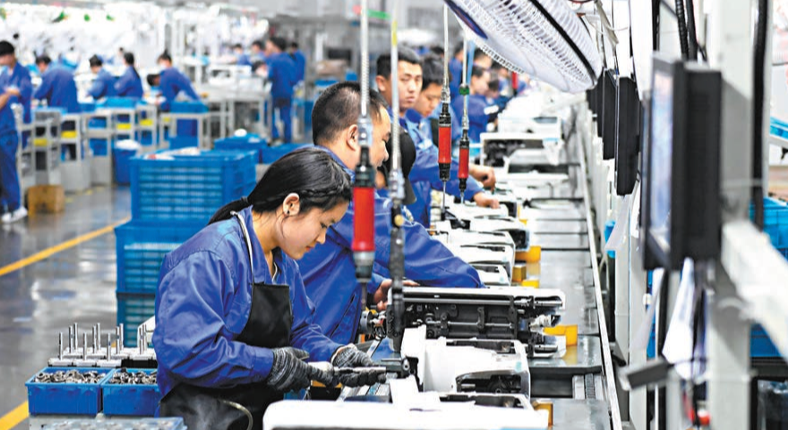
The contrasts between industries are starker still. The internet and mobile internet are almost entirely private, competitive and full of energy. A few years ago the pattern was copy to China; now people talk more about copy from China. Property developers have always run on strong sales volume, so a weak market leaves private ones at risk of blowing up. In traditional manufacturing, clusters built on sheer scale have carried some private firms to world-leading standards, yet the sector as a whole is export-oriented, and tension between China and the outside world now confronts those firms with the question of moving production abroad. Private tutoring, meanwhile, took the brunt of policy uncertainty earlier on.
Overall, today's weak confidence is the concentrated eruption of old problems in the domestic market at a moment when the external environment has closed up. Ownership discrimination and the blurred boundary between government and private business have run through the whole history of the private sector. Entrepreneurs have asked consistently for fairer market access and fairer access to factors of production. That means building out the institutions around market access, giving the fair-competition review system real teeth, and banning local practices that discriminate against private firms, obstruct them or shut them out on ownership grounds. It means better access to financing at lower cost. And it means faster market-based allocation of land, energy and emissions quotas.
Economists and business people have long identified five chronic difficulties for private firms: factor costs, financing that is both scarce and dear, international market risk, policy stability and internal governance. All five turn up in the Forum's surveys year after year, and only their urgency changes. In 2018 the worry was factor costs and how to deleverage. Today it is policy stability and risk in international markets.
Sanlian Lifeweek: How are private firms responding to this uncertainty?
Fu Xiaoyong: Cutting back on financing and investment is itself the conservative response. Beyond that, a crisis is the moment for a company and its founder to stop casting about and build up their own strength. Every successful company has been hammered into shape by one. Wang Shi put it well: a person's real worth is measured by how hard they bounce off the bottom. The same goes for a company.
Entrepreneurial organizations, the forums and industry associations, can also do more as a bridge between business and government, and so take some uncertainty out of policy. The Bankruptcy Law is a case in point. It does a great deal to clear the market, and the Forum produced research and policy recommendations on it years ago, both playing that bridging role and giving entrepreneurs a collective voice.
The larger question, though, is how government keeps the market confident, and keeps entrepreneurs confident.
Watchfulness About the Outside World
Sanlian Lifeweek: You said obstruction abroad set off the domestic market's older problems all at once. When did the external environment turn severe?
Fu Xiaoyong: As I said, confidence buckled when trade frictions began in 2017 and 2018, though no one then knew how long they would last or where they would lead. By 2020 the Forum's survey found only 20 percent of private entrepreneurs still optimistic about external markets, a drop of more than 50 percent over the decade.
The comparison is telling. In 2016, before the frictions, more than half of entrepreneurs named weak international brand appeal as the main obstacle to going out, and 45.6 percent named a shortage of internationally capable people. By 2020 more than 60 percent put the external political and legal environment first. Asked in 2016 where they would most like to expand, they chose Europe and North America. By 2020 the answer was Southeast Asia and Africa, with Europe and North America dropping from the top two places to the bottom two.
During the pandemic, trade troubles were read as the pandemic's doing. Now that it has receded, a consensus has settled among entrepreneurs: the pandemic was probably not the real problem, supply chains keep migrating, and the distance between China and the outside world may be widening.
Sanlian Lifeweek: Are Chinese entrepreneurs ready for an external environment this unsettled?
Fu Xiaoyong: They can already feel how deep the change runs. In 2018 the Forum took the chip industry as a test case for entrepreneurs' reading of the external environment. More than 70 percent treated restrictions on chips as a long-term condition, and 59.1 percent called the external environment the biggest bottleneck facing China's chip industry.
So far, though, only part of the external shift has shown up in prices. The rest has not, and it is the rest that Chinese private entrepreneurs generally fail to see. A recent example: then US President Joe Biden had just signed an executive order authorizing the Treasury to restrict American companies and individuals from investing in Chinese entities in fields touching military security, semiconductors and microelectronics, quantum information technology and artificial intelligence among them. It could hit the Chinese companies concerned hard. The measure had been debated in the United States for a long time beforehand, and if private entrepreneurs only learn of it on the day it is signed, that is too late. Worth watching further: the same ban has been under discussion in Britain for some time. Whether Britain and other European countries, or Japan, follow the American lead is something entrepreneurs should be thinking about now.
Large companies have overseas subsidiaries, and their international teams can read the outside world for them. Some small and medium-sized exporters in Fujian and Guangdong run cross-border e-commerce and have contacts abroad, so they too pick up news. But an entrepreneur in Heilongjiang, or in Ningxia, may have almost no channel to the outside at all.


Comments