Remembering William Baumol: In the Name of China's Reform
Updated: Sep 30
1
He never made China his main subject of study, yet his work ended up explaining China.
2
In 1990 the Journal of Political Economy published a paper that contained not a single mathematical formula. For both the author and the journal, this was out of character. The JPE had long prized mathematical technique, and the author was regarded as one of the most accomplished mathematical economists of his generation. Yet in this paper he asked why the senators of ancient Rome were ashamed to engage in commerce, why the educated men of medieval China spent their lives preparing for examinations, and why the nobles of late medieval Europe grew rich by making war.
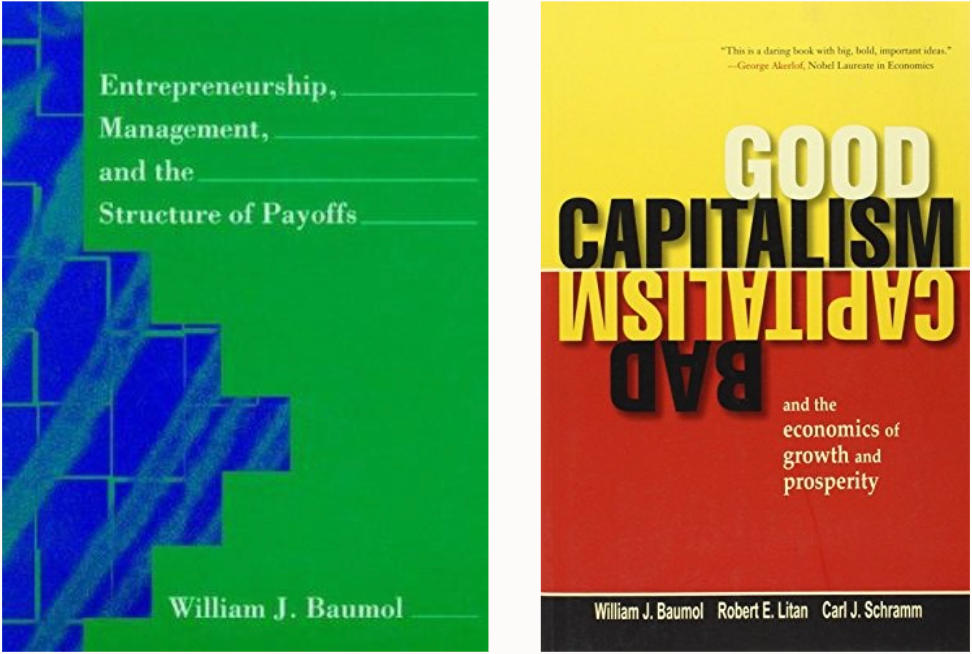
The author was William J. Baumol. Most people remember him for the phenomenon that bears his name, "Baumol's cost disease," which explains why labor costs and consumer prices keep rising in industries where labor productivity has barely improved, such as the performing arts, education, and health care.
In this paper, however, he posed a more fundamental question: where does a society's entrepreneurial talent go?
Over the three decades that followed, his conclusions were cited again and again, and the largest test they ever faced took place in China. This is all the more striking because, in the paper itself, the imperial examinations of medieval China appear only as a briefly sketched historical case.
3
Baumol wrote about entrepreneurs differently from other economists. Before him, the economist most worth mentioning on the subject was Joseph Schumpeter.
Schumpeter identified the entrepreneur's most essential function: innovation. Entrepreneurs break the static calm of an economy. They stir up trouble and hunt for opportunities, keeping the economy from sinking into routine and torpor. In Schumpeter's eyes the entrepreneur was almost a heroic personality, marked by intelligence, ambition, leadership, daring, resilience, and patience.
Baumol's question was a simple one. People with such abilities and temperament could succeed at almost anything and earn outsized returns wherever they went. Why, then, should they become entrepreneurs?
His judgment was that in any society, the share of such people is roughly constant. These endowments do not vanish when one dynasty gives way to another, nor do they appear in bulk because of an official call to action. What really matters is not how many such people there are, but where they put their gifts to use.
Entrepreneurship, in this view, is an allocable resource, and where it flows is determined by a price mechanism: the structure of economic payoffs attached to different activities.
He sorted the activities to which entrepreneurship can be devoted into three categories:
Productive: activities that create new wealth and add to society's total welfare, such as technological innovation, the introduction of new products and services, the opening of new markets, and improvements to production processes. The reward comes from making the pie bigger.
Unproductive: activities that create no new wealth and merely redistribute the wealth that already exists, such as rent-creation and rent-seeking. The reward comes from reslicing the pie. These pursuits demand just as much intelligence, nerve, and organizational skill, sometimes more, yet they add no new value. They simply shift value from one pair of hands to another.
Destructive: activities that not only create no wealth but actually destroy existing wealth and productive capacity, such as plunder, extortion, violence, and war. The pie shrinks, and society suffers a net loss. For much of human history, this was the best-rewarded category of all.
The three-way classification is easy to grasp, and its crux lies in how the choice among the three gets made. How a society's entrepreneurship is allocated among these categories depends not on people's character but on the ranking of rewards that institutions set. Whichever category pays best is where people go, and that ranking of rewards is itself a product of institutions.
Policymakers, Baumol stressed, need not try to cultivate or shape the supply of entrepreneurship. What they need to change is the incentive structure, in other words, the rules of the game. So long as institutions effectively protect property rights, punish rent-seeking and violence, and reward innovation, entrepreneurship will allocate itself to productive activity of its own accord.
The imperial examinations, as Baumol described them, were a system that endured for more than a thousand years, steadily drawing the brightest minds of a vast empire into a single channel. Passing the examinations opened the way into the bureaucracy, and the rewards that followed far exceeded those of any business venture: power, status, prestige, landed estates, and the protection one could extend over one's whole clan. In this ranking of rewards, officialdom came first, land second, and commerce last.
Baumol also offered an indirect answer to the "Needham Question," which has troubled Chinese minds for the better part of a century: why did the modern Industrial Revolution not take place in China?
The protagonists of the Industrial Revolution were not the inventors of technology but the entrepreneurs who made its wide diffusion and adoption possible. The revolution did not happen in China because institutions discriminated against Chinese entrepreneurship and led it astray.
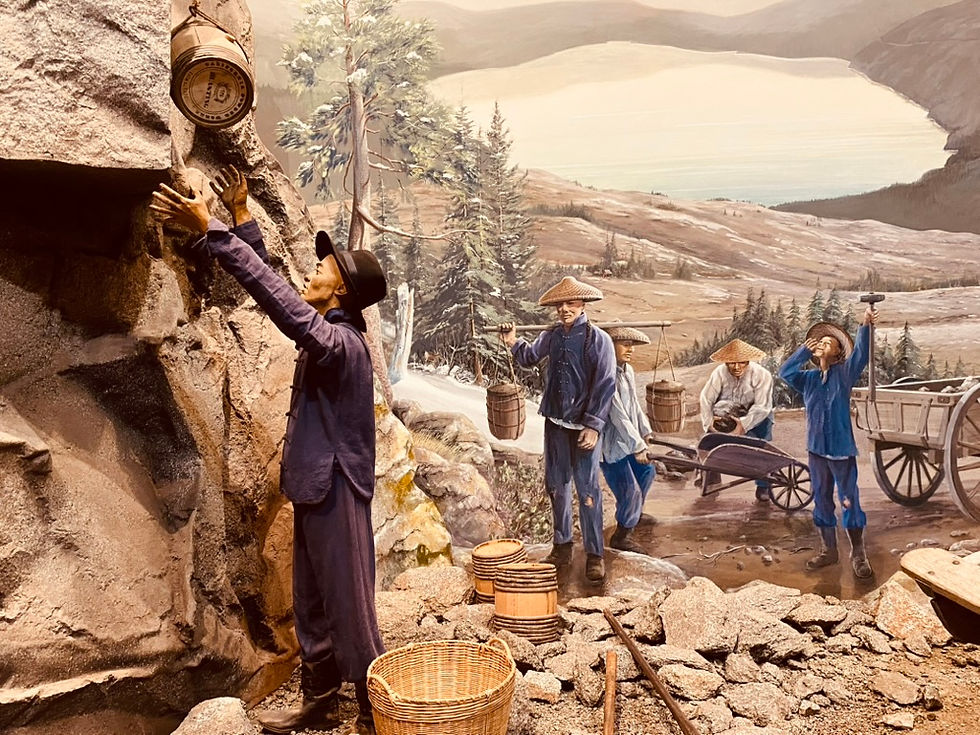
Most answers to the Needham Question have centered on culture, habits of thought, and philosophical tradition. Baumol did not deny any of these, but he offered a plainer perspective that is also harder to refute. Rather than asking why it did not happen in China, ask what China's brightest people were doing at the time.
The answer: preparing for the imperial exams!
4
Baumol's lens offers the most powerful explanation of China's economic growth after 1978. The reallocation of entrepreneurship from agriculture and government to the free market took place on a scale without precedent in Chinese history.
In 1978 China acquired its first generation of entrepreneurs, usually called "peasant entrepreneurs."
The history of China after 1949 was a history of gradually eliminating the entrepreneur. By 1978 the countryside had accumulated a large pool of idle "village talent." Most were peasants, but their ranks also included the urban educated youth who had been sent to the countryside during the Cultural Revolution. A small measure of freedom allowed them to take up some industry and trade. Private rural businesses and "township and village enterprises" began to stir, and rural China unexpectedly became the vanguard of economic reform. That is why Ronald Coase called China's reform an unintended "marginal revolution."
Moving entrepreneurship out of farming and into industry and commerce was the theme of the reform's first decade. Then came the Tiananmen Incident of 1989, after which the entrepreneurial energy within the Party and the government sank into disappointment and lethargy. In 1992 Deng Xiaoping's Southern Tour speeches finally allowed this idle entrepreneurship to break free of the system, and that became the theme of the reform's second decade.
China thus gained a second generation of entrepreneurs. Most of them had given up the "iron rice bowl" of state employment to "plunge into the sea" of business, and they are also known as "official entrepreneurs." It was a spectacular exodus of scholar-officials into commerce, the reverse of the flow that Baumol described in the imperial examination system. For anyone familiar with Chinese history, its significance can hardly be overstated.
A third, fourth, and fifth generation followed. All of them obeyed the same logic: when the payoff structure set by the rules of the game changes, the allocation of entrepreneurship changes with it.
In the 1980s, when Baumol was conceiving and writing his paper, China was still relatively closed. First-hand material on Chinese realities was hard for him to obtain, so he went looking for evidence in the history of medieval China, more than a thousand years earlier. He did not yet realize that the China unfolding in front of him would become the largest-scale test of his reasoning.
In fact, China's economic reform followed precisely William Baumol's path: a country's economic efficiency depends on whether its entrepreneurship is allocated to productive industry and commerce. That may be one reason several Chinese universities have since established Baumol research centers for entrepreneurship.
5
In 2008 the Chinese edition of Good Capitalism, Bad Capitalism, and the Economics of Growth and Prosperity, which Baumol co-wrote with Robert Litan and others, came out. It coincided with the 30th anniversary of China's reform, and once again something unexpected happened.
By 2008, nearly two decades had passed since Francis Fukuyama announced "the end of history." Capitalism, as the system that had brought history to a close, was usually treated as a single form: free markets plus democratic government. Yet American-style capitalism had delivered sustained growth, while the European and Japanese varieties had fallen into long periods of stagnation.
"Capitalism" clearly needed a more finely grained description, and China was to be a beneficiary of that insight.
China in 2008 calls for a little background.
After a full 30 years of growth, the main intellectual puzzle facing the Chinese economy was how to explain that growth and how to sustain it. On the relationship between government and growth, China's leading economists were locked in fierce debate.
The "market school" argued that China had grown in spite of its "big government," which is to say that the big government was an obstacle growth had to overcome. The "government school" countered that growth had happened, and could go on happening, because of an "effective government," which is to say that the effective government was the very precondition for growth.
The other piece of background was the 2008 financial crisis in the United States.
China's reform since 1978 had, in practice, taken America as its teacher. Deng Xiaoping has a widely quoted line: "All countries that have gotten along well with the United States have become rich." The American financial crisis of 2008 therefore sowed a pervasive unease within China's elite. Following the teacher had been enough, but now the teacher was in trouble. What was the student to do?
Someone else's bitter fruit became China's "good medicine." Although deeper problems of reform, such as entrenched vested interests, were becoming more visible and more of a drag, a mood of self-assurance pervaded China's elite. It was at this moment that talk of a "Beijing Consensus" and a "China Model" began to swell into a clamor.
Baumol's insight into the concrete features of capitalism became a sobering dose for a self-assured Chinese elite and for Chinese society at large.
A brief aside. As a researcher who has lived in both China and the United States, I am quite certain that "capitalism" and "socialism" are not accurate words for describing either country. Many may share the feeling that in many respects America is rather "socialist," while China is rather "capitalist." Indeed, it is precisely this crude ideological dichotomy that has kept us from seeing the specific features of each.
Baumol divided capitalism into four types: state-guided, oligarchic, big-firm, and entrepreneurial. No capitalism is pure or perfect, but the form most likely to achieve long-term growth is a blend of entrepreneurial and big-firm capitalism. The entrepreneurial element sustains the capacity for disruptive innovation, which matches Schumpeter's definition of the entrepreneur's core function, while the big-firm element helps new technologies scale up and reach the market.
China, by contrast, displays a blend of state-guided and oligarchic traits: a government that picks "winning" industries and firms, excessive industrial policy, excessive protection of state-owned monopolies, severe corruption, overcapacity, policies that favor a narrow set of vested interests, and a growing dependence of officials and businesses alike on "state guidance."
This new book, whose subject was capitalism, unexpectedly gave China's economic reform a complete and logically consistent narrative.
The reform that began in 1978 left China's unified political system intact while adopting a series of flexible institutional arrangements. These arrangements guided the reallocation of entrepreneurship and gave the Chinese economy a long run of growth.
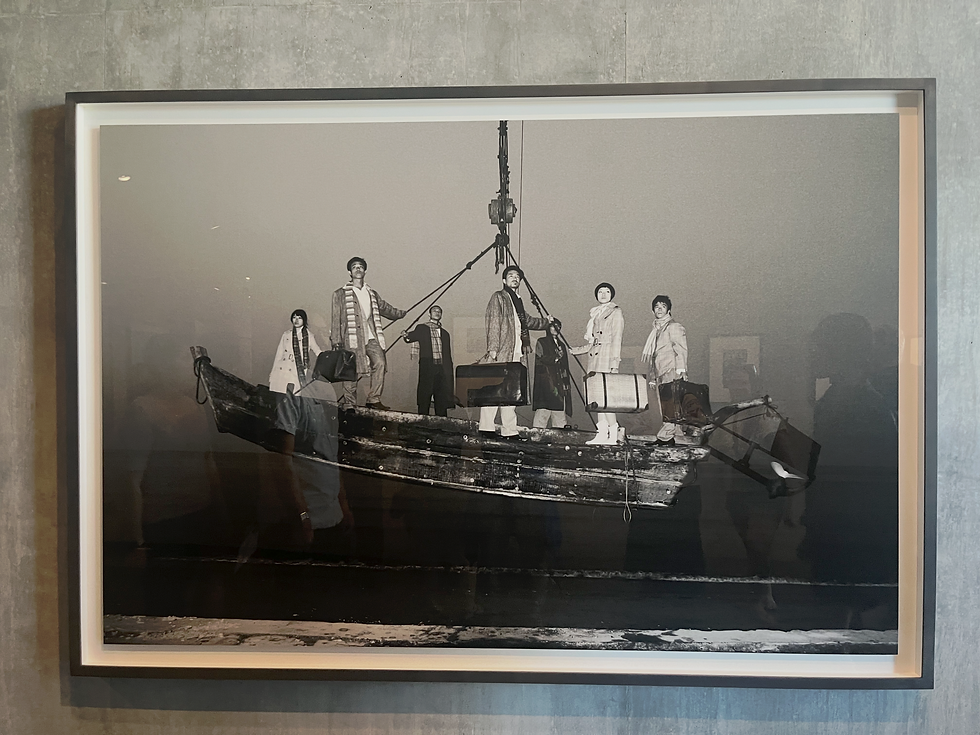
Because the reform was never carried through, these flexible arrangements were never converted in time into formal institutions of the market and the rule of law. Governments at every level still controlled vast power and resources, and the Chinese economy gradually ossified into a state-guided mercantilist system. Abroad, it soured China's relations with external markets. At home, it eroded the institutional environment on which entrepreneurs depend. Chinese entrepreneurship has left its phase of wild, unruly growth behind, and it now depends more than ever on sound markets and the rule of law.
The entrepreneurial spirit, once rekindled, has by degrees begun to gutter.
6
William J. Baumol (1922–2017) was an American economist who taught for many years at Princeton University and New York University and served as president of the American Economic Association (AEA). He wrote tirelessly throughout his life, published hundreds of papers, and made outstanding contributions across many fields of economics.
Seen from China, though, his most important contribution may come down to a single sentence: a country's economic performance depends on what its entrepreneurial people are doing.
Baumol worked like a persistent and meticulous engineer of economics, stitching the entrepreneur, thread by thread, into modern mainstream economics. He once likened the entrepreneur to the Prince of Denmark expunged from the discussion of Hamlet, and he brought that figure back to the very center of the economic stage. For China's reform and for Chinese history, he was a precise physician who prescribed exactly the right remedy, even though he never made China his main subject of study.
In a few days, the 2026 Nobel Prize in economics will be announced. During his lifetime, Baumol was a perennial name on every list of favorites.
I hope that the momentous course of China's reform, which has unfolded just as his theory explained and predicted, will stand as a more fitting tribute to him.
References
1. William J. Baumol, Entrepreneurship
2. William J. Baumol, Robert E. Litan, and Carl J. Schramm, Good Capitalism, Bad Capitalism, and the Economics of Growth and Prosperity
3. Zhang Weiying, The Logic of the Market



Comments